How to Accept Crypto Payments for Vacation Rentals: A Host's Guide
Learn how vacation rental hosts can accept stablecoin payments like USDC. Skip platform fees, get instant settlements, and offer guests a modern payment option with no price volatility.
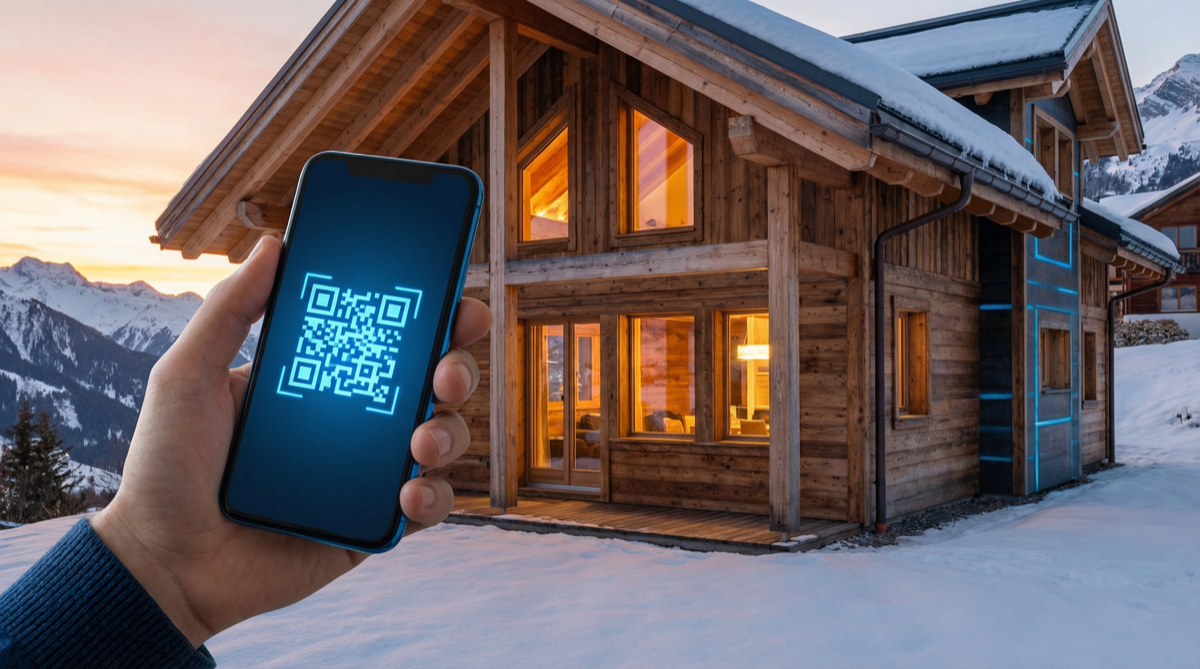
If you run a vacation rental, cabin, or holiday property, you know the pain of platform fees. Airbnb takes 3-5% from hosts. Booking.com charges 15% or more. Credit card processors add another 2.5-3.5% on top.
What if you could accept payments directly from guests—with zero fees, instant settlement, and no middleman?
Stablecoin payments make this possible. And with tools like PayinGo, you can start accepting USDC in under a minute—no technical knowledge required.
Why Vacation Rentals Are Perfect for Crypto Payments
Direct Bookings = Higher Margins
The vacation rental business has a margin problem. Between platform commissions and payment processing fees, you can lose 15-20% of every booking before you even pay for cleaning.
| Fee Type | Typical Cost |
|---|---|
| Airbnb Host Fee | 3-5% |
| Booking.com Commission | 15-20% |
| Credit Card Processing | 2.5-3.5% |
| International Wire Fees | $25-50 per transfer |
| Total Potential Loss | Up to 25% |
With direct stablecoin payments:
- Zero platform commission (you own the relationship)
- Zero payment processing fees (with PayinGo)
- Zero currency conversion costs (USDC is already in dollars)
On a $2,000 weekly cabin rental, that’s potentially $400+ saved per booking.
Perfect for International Guests
Vacation rentals attract guests from around the world. Traditional payments create friction:
- Wire transfers take 3-5 business days and cost $30-50
- Credit card foreign transaction fees add 1-3%
- Currency conversion happens at unfavorable rates
- Some guests can’t get international cards approved
USDC works the same everywhere. A guest in Germany pays exactly like a guest in California—instantly, at the exact amount, with no surprises.
Solve the Volatility Problem
If you’ve considered accepting Bitcoin, you’ve probably worried about price swings. What if a guest books at $3,000 and Bitcoin drops 15% before checkout?
USDC doesn’t have this problem. It’s pegged 1:1 to the US dollar. $1,000 USDC today is $1,000 USDC next week.
Two Payment Scenarios for Rentals
Based on how vacation rentals actually operate, here are two proven approaches:
Scenario 1: Check-in Payments (Flexible Amounts)
Use case: Collecting the final balance at check-in, security deposits, or custom-quoted stays.
How it works with PayinGo:
- Create a payment link at go.payin.com (takes 30 seconds)
- Open the link in POS mode on a tablet at your front desk
- When a guest is ready to pay, they scan the QR code with their crypto wallet
- The screen lights up with a confirmation and plays a sound when payment arrives
- Funds go directly to your wallet—no middleman holds your money
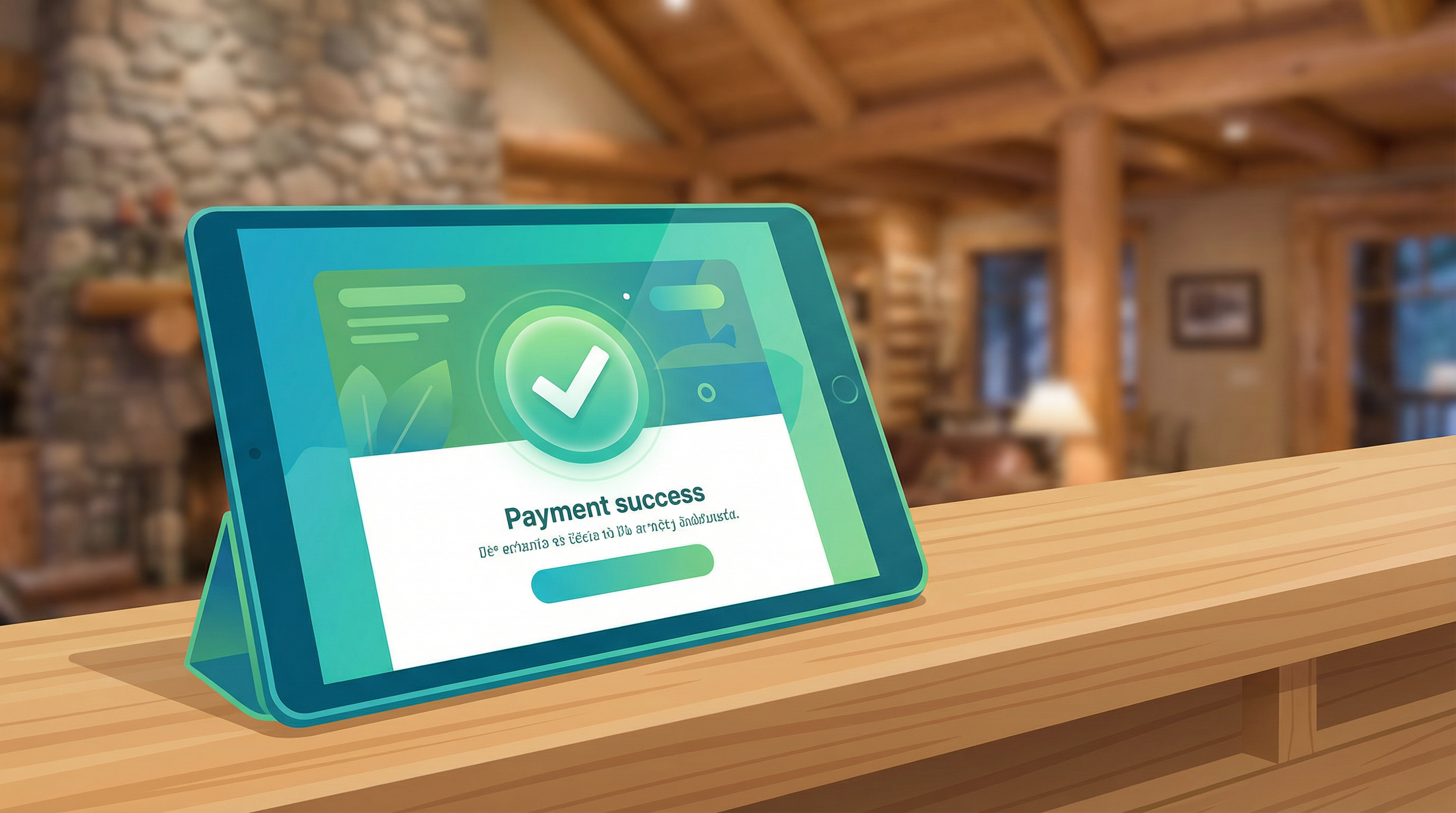
This is perfect for the check-in moment. Even if you’re in the back preparing the property, you’ll know the payment went through from the audio confirmation.
Pro tip: PayinGo’s POS mode includes screen wake lock, so your tablet won’t go to sleep during the check-in window.
Scenario 2: Extras with Fixed Prices
Use case: Late checkout, breakfast hampers, bike rentals, firewood bundles, experience add-ons.
How it works:
-
Create fixed-amount payment links for each add-on:
- Late checkout: $75
- Breakfast hamper: $45
- Bike rental (per day): $25
- Firewood bundle: $15
-
Print the QR codes and place them in the cabin or welcome pack
-
Guests scan and pay directly—no need to handle it in person

This creates a self-service upsell system. Guests buy when they want, you get notified instantly via email or webhook, and the funds arrive in your wallet immediately.
Getting Started in 5 Minutes
Step 1: Get a Wallet (If You Don’t Have One)
You’ll need a crypto wallet to receive payments. Options:
- Coinbase Wallet — Easy for beginners, good mobile app
- MetaMask — Popular for EVM chains (Base, Polygon)
- Phantom — Best for Solana
Download the app, set up your wallet, and save your recovery phrase somewhere safe (offline, not in your email).
Step 2: Create Your Payment Link
- Go to go.payin.com
- Paste your wallet address
- Enter your property name (e.g., “Mountain View Cabin”)
- Click Create
That’s it. You now have:
- A payment link to share with guests
- A POS link for your front desk tablet
- An admin link to view payment history
Step 3: Test It Yourself
Before using with guests, test the flow:
- Open your payment link
- Scan the QR code with your own wallet
- Try a small payment (even $0.01 works)
- Watch the POS screen light up with confirmation
You can pay from the same wallet that’s set to receive—no need to involve anyone else.
Step 4: Integrate Into Your Guest Communication
Add your payment option to:
- Booking confirmation emails: “For direct bookings, we accept USDC payment”
- Pre-arrival messages: Include the payment link with check-in instructions
- Welcome packet: Print QR codes for add-on services
- Your website: Add a “Pay with Crypto” button for direct bookings
Real Numbers: The Fee Comparison
Let’s compare a typical week at a vacation cabin:
| Scenario | Airbnb + Credit Card | Direct + USDC (PayinGo) |
|---|---|---|
| Nightly rate | $300 × 7 = $2,100 | $2,100 |
| Platform fee | -$84 (4%) | $0 |
| Payment processing | -$63 (3%) | $0 |
| You receive | $1,953 | $2,100 |
| Difference | — | +$147 |
Over a year with 30 weeks booked, that’s $4,410 in savings—without changing anything about your property or guest experience.
Common Questions from Hosts
”Will guests actually use this?”
Start by offering it as an option, not a replacement. Many guests—especially international travelers and tech-savvy visitors—actively prefer crypto payments. The crypto-native traveler segment is growing, and being early creates a competitive advantage.
”What about taxes?”
USDC income is treated like any other income for tax purposes. You report it just like credit card payments. The difference is you keep more of it because you’re not paying processor fees.
”Is it secure?”
With PayinGo, funds go directly to your wallet. There’s no third party holding your money, no account that can be frozen, and no chargebacks. Blockchain transactions are final and verifiable.
”What if the guest doesn’t have USDC?”
Guests can purchase USDC easily through Coinbase, Kraken, or other exchanges. Many already hold stablecoins. For those who don’t, traditional payment methods remain an option—USDC is an addition, not a replacement.
”Which network should I use?”
PayinGo supports multiple networks:
- Base — Low fees, fast, Coinbase ecosystem
- Polygon — Established, widely supported
- Solana — Very fast and cheap
We recommend Base for most vacation rental hosts due to its low fees and growing adoption.
The Hospitality Advantage
Vacation rentals that accept crypto payments gain several advantages:
- Attract a new guest segment — Crypto-native travelers actively seek properties that accept digital payments
- Reduce payment friction — No declined international cards, no wire transfer delays
- Improve cash flow — Funds arrive in minutes, not days
- Eliminate chargebacks — No fraudulent disputes months after checkout
- Future-proof your business — Stablecoin payments are growing rapidly
Next Steps
Ready to accept stablecoin payments at your vacation rental?
- Create a free wallet if you don’t have one
- Set up your payment link at go.payin.com (30 seconds)
- Test with a small payment to yourself
- Add to your guest communication as an optional payment method
- Print QR codes for add-on services in your property
The vacation rental hosts who adopt stablecoin payments now will have a head start as this becomes mainstream. Lower fees, instant settlements, and global reach—without the complexity of traditional payment processors.
PayinGo offers free, gasless USDC payment processing across Base, Polygon, and Solana. Create your first payment link in under a minute at go.payin.com.